Showing posts with label Joah Carter. Show all posts

Monday, March 21, 2011

Continuing a Family Tradition

Receipt from 1966

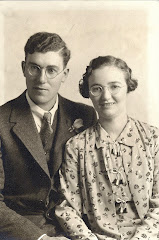
"In 1957, King, Ralph Abernathy, and other civil rights activists founded the Southern Christian Leadership Conference (SCLC). The group was created to harness the moral authority and organizing power of black churches to conduct non-violent protests in the service of civil rights reform. King led the SCLC until his death."(1)  As early has November of 1966, Margaret Upton Waning, like her great-great grandfather before her, was providing financial support to American Black social causes.  Her prayers were not longer than her pocketbook!  I like to think that Joah Carter would have been pleased!

Saturday, March 19, 2011

Joah Carter & the Underground Railroad - Part 4

"Dunkirk Evening Observer"
14 August 1891

"An Abolitionist correspondent in the Warren Ledger says Another Abolitionist in Sugar Grove was the late Joah Carter but it was thought by some that his prayers were longer than his pocketbook so some of the roguish boys thought they would black their faces and call on him at night for money to help them on their way to freedom.  He was about giving them a silver shilling, when his good wife who was holding a lighted candle discovered the deception and says, "I think thee is rather white behind the ear."

Friday, March 18, 2011

Joah Carter 1786-1871

Joah Carter was born the 3rd of April, 1786 in Ripponden, Yorkshire, England the son of William Carter and Elizabeth Riley.  He married Elizabeth Mitton in Halifax, Yorkshire, England on the 5th of March 1810.  

The couple had the following children:
  1. Hannah Carter, b. 24 Jun 1810, Ripponden,Yorkshire,England, married James McFarlane
  2. Elizabeth Carter b. 1812, Ripponden,Yorkshire,England, married Stephen Crouch
  3. Mary Carter b. Jan 1815, Yorkshire, England, married Stephen Mercer, d. 29 Jan 1899, Onondaga Valley, NY.
  4. John Carter b. 1818 - went to sea and last heard of was on a ship trading between the East & West Indies.
  5. Priscilla Carter b. 1821, Yorkshire, England, d. 07 Apr 1897, Lakewood, Chautauqua, NY.
  6. Maria Carter b. 24 Dec 1822, Yorkshire, England, d. 11 Oct 1890, Gowanda, NY.
  7. Mitten Carter b. 1824, d. 1833 Columbia County, NY.
  8. Joseph Carter b. 12 Feb 1829, Hudson, Hudson Valley, Columbia Co, NY, married Mary Howles Jan 19, 1854, d. 07 Jul 1889, Bear Lake, Freehold Township, Warren, PA.
  9. Joshua Carter b. 21 Dec 1830, Columbiaville, Columbia Co, NY, d. 30 Dec 1905, Shawnee Co, Kansas 
Sometime between 1824 and 1829 the Joah Carter family immigrated to the United States settling in Columbia County, New York. Joseph and Joshua Carter were born in New York. 

Carter Farm - Barns - Warren County, PA

In about 1838 the family moved to Freehold Township in Warren County, Pennsylvania.  Joah and his family settled on a tract of uncleared land and this was his home for 28 years.  


Joah Carter and Family 1850 census - Pennsylvania

As mentioned in earlier posts, Joah Carter became very active in the Underground Railroad.  He gave money to the cause, and serving as a Station Master provided a haven for escaping slaves - risking is own life and property for the cause.  His son, Joseph Carter, further contributed toward the abolition of slavery.  Joseph joined the Union Army on the 26th of August 1863 - the very day his daughter, Nellie (Ellen) Carter was born. Joseph served for almost 23 months - participating in 14 regular engagements before being taken prisoner to the notorious Libby Prison.  

Joah Carter and the Mary Carter Mercer Family - 1870 census 

Joah must have been thrilled when the Emancipation Proclamation became a reality at the end of the Civil War.  In about 1866, he and Elizabeth returned to the Onoudaga Valley of New York to live with their daughter, Mary Carter MercerJoah died there on the 13th of April 1871.  A life well-lived.  

Wednesday, March 16, 2011

Joah Carter & the Underground Railroad - Part 3

Here are some notes about Joah Carter's role in the Underground Railroad that I've gleaned from several different websites.


Carter, Joah (James)
Carter, Elizabeth


Location: Freehold Township; Sugar Grove Township, Warren County ; Role: UGRR stationmaster


Documentation: Gregory Wilson/Warren County Historical Society, "Underground Railroad Sites in Warren County, PA," 2005, http://www.paundergroundrailroad.com/sites.htm, accessed January 6, 2006.


English-born Joah Carter received fugitives from Corry, Erie County, and Tidioute and hid them on his property until it was safe to send them onward. His home was located between Sugar Grove and Lottsville. He is shown on the 1850 census as a 64-year-old farmer, living with Elizabeth, age 61, also born in England, Joseph, age 21 and Joshua, age 19. Both boys were born in New York.
http://www.afrolumens.org/ugrr/whoswho/cnames.html


Although little is known today about Joah Carter, his work on the local Underground Railroad gained him such notoriety that in a list of communities including Spring Creek and Sugar Grove with stations, his home the only residence mentioned by name. Carter’s property was a stopping ground between Little Africa in Spring Creek Township, and the North Road in Sugar Grove which would take you to the Catlin & Miller farms.


The Carter Farmstead


Appx. one-half mile past Turnpike Cemetery, Cemetery Road, Freehold Twp., Warren Co., PA
http://www.mysugargrove.com/ugrrsites 

It was said of Joah Carter that his abolitionist “prayers were longer than his pocketbook,” but Carter’s name appears regularly as a local abolitionist, so much so that his home appears in early reports of Underground Railroad routes.
http://www.mysugargrove.com/ugrrabolitionists

In 2004, 2005, and 2006 Sugar Grove, Pennsylvania hosted the "Underground Railroad Convention".  Actors played the parts of Frederick Douglass, 
Soujourner Truth, and Susan B. Anthony, and Joah Carter!

Monday, March 14, 2011

Joah Carter & the Underground Railroad - Part 2

"Brief History of Sugar Grove"


"When, in 1792, territory west and north of the Allegheny River was opened for settlement by the Holland Land Company, the good, cheap earth of present day northern Warren County attracted settlers most of whom took up farming. The first permanent settler is thought to have been Robert Miles, a young Scotch Irishman. Many of the first settlers were natives of Scotland and Ireland. In fact, the person who probably did more to build up early Sugar Grove than any other settler was David Brown, who was born in Belfast, Ireland. For a time, Sugar Grove was called “Brownsville”.


Because of the origin of many of the first settlers, the Presbyterian Church was the first house of worship officially begun in the village. Later a Congregationalist Church was established, these churches later to be joined by the Methodist and Swedish Evangelical Lutheran Church congregations.

Sugar Grove grew to be an example of early rural American life. Schools were begun, the first undoubtedly being started in a small log cabin in 1814. It was dubbed the “little school”. A second small school built in 1828 was called the “White School”. Both schools operated until 1854 when a school was built near the village center on land donated by another early settler, John Barr. In 1869 a fourth school, “Miles Hall” was built and became both school and community center for many years.

In 1821, the name of the town was changed from Brownsville to Sugar Grove, (Sugargrove). The present name is derived from the vast original stands of maple forests found in the area. In the 1800’s the roads were rough, and unfinished in condition. They were, in fact, not much more than mere bridal-paths. The village itself was very small. Still, a few business and industries flourished. Among them were the Willson Inn owned and operated by John I. Willson and the Exchange, an important tavern owned and operated by Samuel Hall. There were also mills, both gristmills and sawmills run by water from local streams until the volume of those streams dropped due to the clearing of the local forests. Steam power then was used to run the one tannery and a stave and shingle mill.

In addition there were blacksmiths, general stores, a drug store a tin-shop and a grocery. A bank, post office, and newspaper were also established.


Sugar Grove was a small, closely knit community. Early ideas championed were those of temperance and of anti-slavery. Sugar Grove has had an active WCTU organization for many years, and prior to the Civil War, it was a stopping place on the Underground Railroad aiding slaves in their journey to Lake Erie and then on to Canada."
http://www.sugargrovepa.com/history.htm

"The Miller Mansion was the home to the widow Cynthia Catlin Miller, the matriarch of Sugar Grove’s society. From here, Miller organized sewing circles including the Female Assisting Society and the Ladies Fugitive Aid Society which provided aid to escaping slaves. Accounts speak to at least two documented episodes of refuge being provided to escaping slaves as part of the Underground Railroad at her home. On April 7, 1857 Miller’s son details “a fugitive from southern society called at the door this morning. He was a fine-looking fellow of thirty years or so and is making his fourth attempt at visiting Canada.” Prior to that event, Miller was harboring two your girls when in March1849 they were kidnapped from her residence. The local handwritten newspaper, the Sugar Grove Journal, reports of the incident “Modestly secured from the public gaze, they kept within their own easy work, meddling never with nobody. We are horrified to report that one bitterly cold night, they were most ferociously kidnapped! And, to the everlasting disgrace of our police taken off entirely!! They unquestionably were taken south, indeed, there is positive proof that they were seen, a few days afterwards, in a strong walled building, less than a hundred miles south of this place.”


In June of 1854 Sugar Grove was selected as the site of what Frederick Douglass would refer to as "the crowning convention of them all." The Sugar Grove Anti-Slavery Convention boasted keynote speakers Douglass, Rev. JW Loguen and Lewis G. Clarke, the real-life George Harris of Uncle Tom’s Cabin. This event helped secure Sugar Grove its place in history as one of the leading communities in the fight against slavery.

During the two-day Sugar Grove Anti-Slavery Convention at which acclaimed anti-slavery author and lecturer Frederick Douglass was the keynote speaker, Miller welcomed Douglass to her home for tea. Her son writes of the events as “… Frederick Douglass and Dr. Thorne were here to tea. Douglass is stern & eloquent upon the stand and gentle, sociable and altogether agreeable at the fireside. It is but sixteen years since he was a hunted fugitive from a southern plantation.”
http://www.warrenhistory.org/PHMCapp3.htm
http://www.mysugargrove.com/2010CHUGRR

This is the background for Joah Carter when he arrives from Columbia County, NY to Sugar Grove, PA sometime between 1830-1840.

Saturday, March 12, 2011

Joah Carter & The Underground Railroad

I've determined that our Carter ancestors were involved in the Underground Railroad. First some historical background....

The left arrow pointing to Niagara Falls runs through Warren County, PA

"The Underground Railroad was an informal network of secret routes and safe houses used by 19th-century black slaves in the United States to escape to free states and Canada with the aid of abolitionists and allies who were sympathetic to their cause. The term is also applied to the abolitionists, both black and white, free and enslaved, who aided the fugitives. Other various routes led to Mexico or overseas. Created in the early 19th century, the Underground Railroad was at its height between 1850 and 1860. One estimate suggests that by 1850, 100,000 slaves had escaped via the "Railroad". British North America, where slavery was prohibited, was a popular destination, as its long border gave many points of access. More than 30,000 people were said to have escaped there via the network at its peak, although US Census figures account for only 6,000. The Underground Railroad fugitives' stories are documented in the Underground Railroad Records."


"Even at the height of the Underground Railroad, fewer than one thousand slaves from all slave-holding states were able to escape each year (just over 5,000 court cases for escaped slaves recorded), a quantity much smaller than the natural annual increase of the enslaved population. Though the economic impact was small, the psychological impact upon slaveholders of an informal network to assist escaped slaves was immense. Under the original Fugitive Slave Law of 1793, the responsibility for catching runaway slaves fell to officials of the states whence the slaves came, and the Underground Railroad thrived."

 "With heavy political lobbying, the Compromise of 1850, passed by Congress after the Mexican-American War, stipulated a more stringent Fugitive Slave Law. Ostensibly, the compromise redressed all regional problems. However, it coerced officials of free states to assist slave catchers if there were runaway slaves in the area, and granted slave catchers national immunity when in free states to do their job. Additionally, free blacks of the North could easily be forced into slavery, whether they had been freed earlier or had never been slaves. Suspected slaves were unable to defend themselves in court, and it was difficult to prove a free status. In a de facto bribe, judges were paid more ($10) for a decision that forced a suspected slave back into slavery than for a decision that the suspected slave was in fact free ($5). Thus, many Northerners who would have otherwise been able and content to ignore far-away regional slavery chafed under nationally-sanctioned slavery, leading to one of the primary grievances of the Union cause by the Civil War's outbreak."

"The escape network was solely "underground" in the sense of being an underground resistance. The network was known as a "railroad" by way of the use of rail terminology in the code. The Underground Railroad consisted of meeting points, secret routes, transportation, and safe houses, and assistance provided by abolitionist sympathizers. Individuals were often organized in small, independent groups, which helped to maintain secrecy since some knew of connecting "stations" along the route but few details of their immediate area. Escaped slaves would move along the route from one way station to the next, steadily making their way north. "Conductors" on the railroad came from various backgrounds and included free-born blacks, white abolitionists, former slaves (either escaped or manumitted), and Native Americans. Churches also often played a role, especially the Religious Society of Friends (Quakers), Congregationalists, Wesleyans, and Reformed Presbyterians as well as certain sects of mainstream denominations such as branches of the Methodist church and American Baptists."

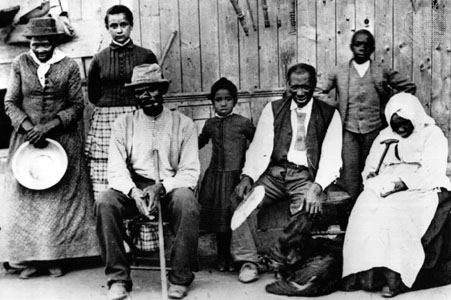
Harriet Tubman and escaping slaves

"To reduce the risk of infiltration, many people associated with the Underground Railroad knew only their part of the operation and not of the whole scheme.  The resting spots where the runaways could sleep and eat were given the code names “stations” and “depots” which were held by “station masters”. There were also those known as “stockholders” who gave money or supplies for assistance. There were the “conductors” who ultimately moved the runaways from station to station. The “conductor” would sometimes act as if he or she were a slave and enter a plantation. Once a part of a plantation the "conductor" would direct the runaways to the North. During the night the slaves would move, traveling about 10–20 miles (15–30 km) per night. They would stop at the so-called “stations” or "depots" during the day and rest. While resting at one station, a message was sent to the next station to let the station master know the runaways were on their way. Sometimes boats or trains would be used for transportation."


Harriet Tubman & runaway slaves

"Estimates vary widely, but at least 30,000 slaves, and potentially more than 100,000, escaped to Canada via the Underground Railroad. The largest group settled in Upper Canada (called Canada West from 1841, and today Southern Ontario), where numerous Black Canadian communities developed. These were generally in the triangular region bounded by Toronto, Niagara Falls, and Windsor. Nearly 1,000 refugees settled in Toronto, and several rural villages made up mostly of ex-slaves were established in Kent County and Essex County."


Article taken from Wikipedia: